 Imagino que a muchos les resultará extraño que un pastor protestante se presente como un eremita urbano, pero no hay nada extraño. Lutero siempre resaltó la importancia de la vida de oración, es más, él siempre decía que lo primero que debemos hacer al comenzar el día es orar, y si nos sentimos tentados debemos orar más fuertemente, orar con los salmos, orar el padre nuestro, recitar el credo y los diez mandamientos. Para Lutero esa era una piedra angular de nuestra espiritualidad. La fe es un don divino, pero la fe nos lleva a desear más y más estar en la presencia de Dios.
Un eremita urbano es un cristiano que ha sentido intensamente la llamada de Dios a una vida de oración, estudio de las escrituras, contemplación y servicio a Dios. El eremita urbano no depende de otros, sólo depende de Dios. Dios es su todo, es su proveedor, es su camino y es su destino último. Ese Dios lo llama a descubrir su presencia en sus hijos, en el pueblo de Dios, en los hermanos y hermanas de Jesús. El eremita urbano vive en la ciudad o en su pueblo, trabaja, estudia, come, duerme, hace ejercicio. Es en casi todo semejante a cualquier otro hijo de Dios. Pero hay algo peculiar y único en su vida, es ese llamado incesante a la oración constante, a la liturgia de las horas, al oficio divino diario. La oración de la mañana, la tarde, la noche y la lectura espiritual de la Biblia con el leccionario diario y los comentarios de los escritores de espiritualidad marcan su rutina. El eremita urbano organiza su tiempo en torno a la oración litúrgica de la iglesia. Su trabajo manual o intelectual se ubica circunscrito a su tiempo entre una hora litúrgica y otra. El eremita gana su pan con su trabajo, ve en su trabajo una extensión de su vida de oración y de su vocación de amar a Dios intercediendo por el mundo. El mundo recibe la bendición de sus oraciones, y solamente Dios conoce la pasión del eremita en su intercesión por las necesidades del mundo y de la gente. En la soledad de su recinto, a puertas cerradas, eleva su plegaria al Padre Celestial en el nombre de Cristo y en la fuerza del Espíritu Santo. La ermita es el templo donde se elevan las oraciones por los necesitados, la soledad y el silencio se llenan entonces de la presencia de la gloria divina. El corazón se eleva y la mente se ilumina, los ojos de la fe contemplan el cielo abierto y al Hijo de Dios a la diestra del Padre. El eremita ve con los ojos de la fe, no ve las cosas que se ven solamente, sino que ve también las cosas que no se ven, aquellas que solamente el Espíritu de Dios nos revela. En un mundo roto, fracturado por las guerras, experimentando la insuperable polarización y el odio, el ministerio del eremita urbano es urgente. Se necesita una presencia del amor de Dios y del obrar del Espíritu Santo en medio de la ciudad. Se necesita una presencia de serenidad y perdón, de bienvenida y unión, una voz de paz y no de conflicto. El eremita ha sido llamado a eso. A orar y a servir. Sirve con su trabajo, ora con temor y temblor. No conoce el futuro, pero sabe que el final del camino es la unión eterna con Dios, la visión beatifica de nuestro creador. El eremita camina inspirado por esa visión. El eremita vive aquí y ahora la presencia del reino de Dios y su justicia y descansa en la palabra de Jesús que le dice: no temas, en el mundo tendrás aflicción, pero confía, yo he vencido al mundo (Juan 16,33). Amen. Pastor José Luis.  For God: the creation, the land, the people, and the whole world need to have a time for rest, a time to pause, to stop, to renew, to enjoy and to refresh. The world and the creatures need to have a time for renewal. Deuteronomy 5:12-14 says:
Observe the sabbath day and keep it holy, as the Lord your God commanded you. Six days you shall labor and do all your work. But the seventh day is a sabbath to the Lord your God. This commandment was given in a time where the world never stopped, the slaves had to work for life 24/7, exploitation was the rule, and the rule of the strong over the weak was the norm. Imagine how revolutionary and countercultural was to have a divine commandment that prescribes that after six days, on the seven day: you shall not do any work—you, or your son or your daughter, or your male or female slave, or your ox or your donkey, or any of your livestock, or the resident alien in your towns, so that your male and female slave may rest as well as you. God said everybody has to rest the seventh day, the free person and the slave, the land and the animals, everything should stop because only when we stop we can understand the real meaning of freedom, life and the meaning of life. It is very interesting that God highlights this with these words: 15Remember that you were a slave in the land of Egypt, and the Lord your God brought you out from there with a mighty hand and an outstretched arm; therefore the Lord your God commanded you to keep the sabbath day. If God liberated Israel from the Egyptian slavery, Israel needs to appreciate that freedom and not allow the people to be enslaved again by the pressure and stress of an unstoppable oppressive routine that never stops. Israel should not enslave itself with a workaholism. People must work six days, but they need to stop on the seventh day to enjoy the presence of God and enjoy the freedom that God gives them. God renews his creation through sabbath, God renews his children through sabbath. This is the time that God uses to renew us, refresh us, and allow us to enjoy communion with him. Sabbath is a great time to know God better, because we don’t have to be worried about meetings, schedules, traffic time, duties, projects, visits, etc. We are invited by God to be renewed and the way that God uses to renew the world and his children is the sabbath. Our Lord clearly expressed the importance of how to enjoy the sabbath when he declared that: “The sabbath was made for humankind, and not humankind for the sabbath; 28so the Son of Man is lord even of the sabbath.” The sabbath is not to cause stress or overwhelm people with rules and pressure like the Pharisees were doing. The sabbath is to allow people to rest and enjoy life and creation and the love of the living God. When Jesus healed the sick on sabbath, he showed that God sees the sabbath as the time to save lives and do good things for his children. The sabbath is when God comes and heals the sick, the sabbath is the time for God´s intervention to refresh, renew and restore. The sabbath is the time when God blesses the world with refreshment and regeneration. Our broken world was forced by the Covid 19 Pandemic to take a forced sabbatical. If you check documentaries and videos about how the planet renewed when we were forced to stay home for the pandemic, you will notice that in the middle of the suffering, grief, and pain of millions of lives and our loss as result of the Covid 19 Pandemic, the planet, the creation, the air, the waters, and, we, the survivors experienced a new perspective of how the regeneration of the planet can take place when we just stop. The planet was forced to have a dramatic sabbatical by the pandemic, and we as a civilization should ask ourselves how dangerous our industrialized way of living was that we needed to experience a catastrophe like the pandemic to allow the planet and ourselves to breathe clean air again, to rest again and to be renewed again in the middle of a global crisis. The pandemic forced us to rethink our way of living. Now in the post pandemic world, in our new normality, we need to evaluate if we learned from the tragedy of the pandemic, or if we will repeat the tragedy again. We live in a world that never stops, when we are not working, we are absorbed by social media, computers, the news, noise, and the images in front of us never stop. That is why we are living in a world where humanity as a collective is experiencing burnout. The words of Jesus are an urgent countercultural reminder that we need to repeat: The sabbath was made for humankind. Yes, human beings need to rest, to pause, to enjoy life, to celebrate friendship, to disconnect from the internet and just relax and enjoy the company of the people that are important in life and reconnect with God and our soul. We need to enjoy the sabbath because we all need the sabbath. The sabbath was made for humankind. Thanks be to God for this precious gift; thanks Lord for giving us the sabbath.  The call of Jesus to become the missionaries was not a call to the twelve only; in the gospels we find that all disciples are called to be prophets, apostles, righteous ones and children, and participate in the mission incarnating these figures that are figures expressing Christ ministry. Then, how can a disciple find courage to live such a life?
If we try to live as prophets, apostles, righteous ones, and children of God, we can understand why Jesus sent his disciples with authority. That authority of the word, the practice of the word and the simplicity of life. All that gives us the possibility to proclaim forgiveness of sins, love, reconciliation, and friendship. I think that there are a lot of opportunities to communicate the message, but at the same time there are a lot of things that we need to consider when we communicate about ourselves. We are humans and as humans we make mistakes, we can hurt others and we can be hurt by others, but the grace of God is the space where we can experience the forgiveness of our sins. That grace is our safe ground and with that grace we can move forward against the temptations and recover from our falls. Temptations and falls are part of the journey, but also forgiveness and new beginnings. This is the way we can do things together and feel that we can grow in our relationship with Christ. It is not an easy way; it is a way marked by the cross. The cross is our cross, we die there also, and we are saved dying to our sins there. Our sins need to die daily, and a new life needs to emerge because of the love of God operating in our community and in our personal experience. Welcoming others and to be welcomed by others are the real challenges that we need to accept as part of our Christian life. Welcoming is the call, but welcoming is not an easy experience, because welcoming implies to welcome the challenge that others are bringing into our life. The people around us bring blessings, and we need to be ready to welcome the blessings they are bringing to us. You need to enrich your life of discipleship and impoverish your life of sin. Sin and sinful behaviors need to be attacked with a life of discipleship. Spiritual maturity and humility need to grow and be enriched, so the grace of God can abound in us and be shared with others as a testimony of the love of God transforming us and liberating us from fear and mistake. This is the miracle of discipleship, the opportunity to experience in our lifetime the power of God transforming us according to the image and will of Christ. Open your hearts and minds to the newness of the Gospel, accept the challenge to be a prophet, an apostle, a righteous one and a child of God, and see how the transformation of your life of discipleship as a follower of Christ is enriched and through your enrichment other people are also blessed with the same blessings of the gifts of God that you will be carrying with you wherever you go.  Deconstrucción y Reconstrucción
La tarea de la postmodernidad ha estado centrada principalmente en demostrar la necesidad de hacer una deconstrucción de todos los discursos, probando asimismo que todos los discursos (relatos) hoy en día ya no son viables. Detrás de cada relato están presentes visiones e intereses políticos y de clase que únicamente han buscado justificar sistemas de dominación y explotación de unos a favor de otros a lo largo de los siglos. Es innegable que desde sus origines los diferentes relatos religiosos y políticos (como los mitos fundaciones de los diferentes imperios y civilizaciones) fueron creados con el afán de justificar el dominio de un determinado grupo a través del uso y abuso del poder. Nos ha tocado vivir una época en la cual hemos podido cuestionar la unicidad del sentido de los relatos y descubrir que detrás de ellos hay multiplicidad de intereses ocultos, de modo que en lo escrito hemos también aprendido a buscar aquello que no está escrito y que precisamente al brillar por su ausencia nos revela verdades que no se nos han querido contar. Los grandes relatos de nuestro tiempo han sido desmantelados y desnudados de su carácter absoluto y hoy podemos verlos como narraciones que vistas desde diferentes ángulos nos permiten apreciar los diversos intereses que han tratado de plasmarse e imponerse gracias a la cultura dominante que encontraba su justificación en una única interpretación oficial de los discursos. Frente a ese proceso de deconstrucción surge la interrogante si éste es el final de la racionalidad y la caída en un gran silencio nihilista, o si es más bien el comienzo de una nueva era en la cual debemos de ponernos a trabajar en reconstruir nuestra historia y nuestros relatos de acuerdo a los descubrimientos que hemos visto aparecer durante el proceso de deconstrucción. La pregunta nos empuja a analizar cuáles serían las motivaciones detrás del intento de reconstrucción. ¿Por qué deberíamos reconstruir lo que hemos deconstruido? ¿Por qué necesitamos un nuevo relato? Esta pregunta al final nos empuja a meditar si es que como especie racional podemos vivir sin un relato que interprete quiénes somos y qué es el mundo. Conocimiento y Realidad La realidad está formada por el ser en su totalidad, esto es, por el mundo y lo humano. Lo humano es parte del ser de la realidad, pero a la vez se auto diferencia de la realidad total en cuanto su auto conciencia, lo humano es consciente de su ser racional y su parcialidad, por ende, se sabe que es parte de un ser total que lo sobrepasa. Desde esta perspectiva, el conocimiento del ser es el proceso por el cual lo humano se autodiferencia y en esa disminución del ser en su totalidad, lo humano es capaz de contemplar la parcialidad que queda como resultado de la autodiferenciación. El mundo es el objeto de la contemplación, lo humano es el sujeto en diferenciación. El mundo y lo humano juntos forman el ser, es decir, son la realidad total. El mundo en su parcialidad es solo un conjunto de cosas. Las cosas tienen sentido en ser parte de la parcialidad que es el mundo solo porque lo humano al contemplarlas y pensarlas les da sentido y las ve como parte del ser. Lo humano sin el mundo no existiría, porque no se puede existir en el vacío o la nada del mundo material. El mundo sin lo humano no tendría quien lo contemplara y por lo tanto carecería de significado pues el mundo no es consciente que es mundo, solo lo humano le da esa característica. Por tanto, la realidad tiene siempre sujeto y objeto: lo humano y el mundo, inteligencia y cosas, eso es la realidad total. Reino de Dios y Mundo. El reino de Dios es el reino viniendo al individuo, entrando en él, pero a la par, el reino de Dios está presente en mundo, en el todo del cual también es parte lo humano. El reino afecta la totalidad del ser, no solo el corazón de lo humano sino también el ser del mundo. Conociendo al mundo conocemos como está en él el reino. Conociendo lo humano conocemos al reino que mora también en nosotros. Contemplando la totalidad del ser, contemplamos la totalidad de la presencia de Dios dentro de nosotros y fuera de nosotros. Dios es esa network que conecta todo lo que forma la realidad total, Dios es la network que une lo humano y el mundo. La religión es una forma de encontrar al ser, el ser se muestra en el mundo de diferentes formas, arte, religión, derecho, sexualidad, música, arquitectura, amistad, naturaleza, orden, caos, creatividad, política, filosofía, ciencia, etc. El ser es lo que es y está en y alrededor de nosotros, es el fundamento de lo que somos, somos en el ser, el ser es en nosotros. El ser es Dios, Dios en nosotros y nosotros en Dios. La realidad total en Dios y Dios en la realidad total son el ser en su plenitud. Razón Simbólica. Nuestro cerebro tiene un área mística y religiosa que sirve para expresar nuestro amor por lo sublime y trascendental. Esa área existe además para hacernos buscar sentido a las cosas y vivir en una esfera simbólica y espiritual. No debemos negar esa área de nuestro cerebro, sino debemos abrazarla y usarla porque en ella se desarrolla la razón simbólica que es parte de nuestro proceso de apreciación de lo bello y lo espiritual. Lo místico no es irracional, sino que es parte de la razón simbólica que a su vez es parte de nuestra razón. Cuando razonamos sobre el sentido de la vida y el mundo, la razón simbólica nos ayuda a entender el porqué de la religión. La razón simbólica en si misma sin conexión con la razón en su totalidad puede caer en un reduccionismo del mundo a lo meramente simbólico, y así absolutizar la religión como razón universal sin serlo. La razón debe por eso siempre recordar que la razón simbólica es solo una fracción de lo que la razón es y por ello solo una fracción de lo que vemos y provee una información que debe ser integrada en el proceso de todo el pensamiento como parte del mundo religioso espiritual y simbólico. La razón simbólica ha ayudado a nuestra especie en su evolución a poseer respuestas temporales y significativas en momentos en los cuales nuestra razón en su totalidad aun adolecía de una plena comprensión de áreas del conocimiento científico y factual. Esas interpretaciones simbólicas asumieron gradualmente la forma de sistemas religiosos y nos proveyeron de certezas que en su momento sirvieron para mantener y fortalecer nuestra civilización. Hoy en día la razón simbólica sigue siendo útil pues ella nos ayuda a organizar aquello que no es ciencia o filosofía en un área del conocimiento donde está la religión y la espiritualidad. De esta forma la razón simbólica provee asistencia al proceso científico y progreso racional de nuestra especie en la medida que nos sirve para organizar el mundo místico, religioso y simbólico y, al hacerlo, evita que mezclemos ciencia y religión. Lo humano, lo bello y lo divino son analizados simbólicamente por la religión, la filosofía y la estética. La belleza es la conexión entre lo humano y lo divino. La belleza es tal porque nos conmueve. La reconstrucción de nuestra racionalidad debe integrar por ende la totalidad de la ciencia, religión, filosofía, arte, literatura, historia y derecho en un orden donde cada una de estas áreas del conocimiento respeta la parte de la razón a la cual pertenece, de esta forma la razón total, en la cual la razón simbólica y la científica se encuentran expresará la racionalidad que sin mutilaciones habrá de construir un nuevo relato, un nuevo paradigma y un nuevo orden para el futuro de nuestra civilización. Escrito en Tampa. FL. Julio 2016 Febrero 2017.  La religión es un modo en el cual se manifiesta el ser.
No se puede mutilar el ser descartando la religión como si esta fuera solamente una forma arcaica del pensamiento. El ser (lo humano y el mundo) se expresa en uno de sus modos de ser en la religión, al hacerlo, esa expresión se manifiesta por medio del lenguaje simbólico. La religión es una expresión del ser que solamente puede leerse, entenderse, interpretarse y vivirse por medio de la apertura a la experiencia del lenguaje simbólico. El lenguaje simbólico no es solamente el lenguaje de la religión, sino que, además, es la manera en la cual la religión se estructura. La religión no es producto de la ciencia ni puede leerse en términos científicos, y aunque la religión es un hecho cultural, la cultura en su totalidad es una expresión del ser dentro de la cual hay otras expresiones del mismo ser incluidas, una de esas expresiones es la religión. La interpretación de los escritos sagrados, las formas de culto y adoración, la piedad, y demás expresiones del ser en la religión por ende solo se entiendan plenamente cuando se entienden bajo el lenguaje simbólico. No se puede interpretar la religión de otra forma porque se terminaría convirtiéndola en algo que no es ni pretende ser. La religión es la forma en la cual el ser se expresa de manera simbólica por medio de un lenguaje propio y, que, en última instancia, describe una manera de ser que es parte integral de la totalidad del ser (lo humano y el mundo). Debemos aceptar el ser en su totalidad, y ello significa, aceptar aquellas formas en que el ser se expresa de manera parcial, reconociendo que esa parcialidad es tal, en la medida, en que el ser siempre está siendo y expresándose en el mundo. Toca a la ciencia interpretar el universo en el lenguaje de la ciencia, a la política o a la informática en el lenguaje de la política o de la informática, y a la religión enseñar la mejor manera de entender el lenguaje simbólico en el cual el ser se expresa en la religión. El lenguaje simbólico no es creación nuestra sino del ser mismo que se expresa en esos términos, nosotros descubrimos la existencia del lenguaje simbólico en la medida que descubrimos que hay una forma de ser en nosotros y fuera de nosotros que se revela, y que no pertenece al estudio de las ciencias de la naturaleza, sino a un área que en el mismo lenguaje simbólico hemos descubierto como el misterio. El misterio es la manera en la cual el ser se da a conocer en la religión, el misterio es el ser en su expresión simbólica en su revelación a nuestra conciencia. Sabemos del misterio porque se manifiesta a nosotros y se expresa en el lenguaje simbólico que le es propio, y que nos llega del misterio para ayudarnos a entenderlo y a ponerlo en términos que sean compresibles a nuestra conciencia. La religión, vista desde este ángulo, nos llega de fuera, nos llega como la manifestación del ser a nuestra conciencia que busca expresar una de las dimensiones del ser: la dimensión simbólica. Revelación es el término que usamos por eso para describir a esa manifestación del ser que llega a nuestra conciencia por medio del misterio y que es procesada gracias al lenguaje simbólico que el misterio tiene en su propia estructura de ser. Es revelación porque viene de fuera (extra nos), nosotros no la inventamos, sino que la reconocemos y la procesamos gracias a que nuestro cerebro tiene la capacidad de reconocer y procesar la razón simbólica y decodificar y usar el lenguaje simbólico. La hermenéutica de la razón simbólica es, por tanto, resultado de la manifestación del misterio como modo del ser a nuestra conciencia quien a su vez entiende esta razón por la existencia de la razón simbólica en nosotros y, con el uso del lenguaje simbólico, procede a interpretar el mensaje del ser que nos llega a través de la religión. Pero además de eso, podemos notar que nosotros existimos con la capacidad de usar el lenguaje simbólico, entenderlo e interpretarlo, porque éste es parte también del ser en nosotros (intra nos) y, de esa forma, todos los seres humanos somos capaces de tener una religión, porque todos somos portadores en nuestro cerebro de una razón simbólica que nos ayuda a expresarnos en todo lo que se refiere a nuestra contemplación del misterio. Visto desde este ángulo la religión surge desde dentro, del interior de nosotros. Por ello, otro momento hermenéutico está presente cuando el ser en nosotros interpreta el ser en el mundo y contempla el misterio que se revela en el mundo, lo busca y lo trata de describir, ya que es parte de quienes somos el tener esa capacidad de usar un lenguaje que solamente adquiere sentido cuando se utiliza para interpretar el ser como misterio. Ese segundo momento es lo que llamamos contemplación (theoria). La contemplación es el uso consciente de nuestra razón simbólicapara buscar el misterio en el mundo. En la contemplación somos nosotros los que salimos a buscar el ser que se expresa como el misterio. En la contemplación somos nosotros los que creamos el sistema teológico y religioso para poder analizar y explicar el misterio. La contemplación es la forma en la cual la religión aparece como una creación humana, a diferencia de la revelación donde la religión se ve más como un hecho que viene de fuera de nosotros. Revelación y Contemplación son por ello dos partes de un mismo todo, dos maneras de ver el proceso hermenéutico. En la revelación el misterio usa el lenguaje simbólico para comunicarse con nosotros, en la contemplación nosotros usamos el lenguaje simbólico para explicar el misterio.  El Evangelio y los evangelios:
El Evangelio como tal es el mensaje que se proclamó al mundo declarando que el reino de Dios como realidad ha llegado a nosotros y nos llama a participar activamente en su expansión. El Evangelio es el mensaje de Jesús de Nazaret.
 In Matthew 10:34 Jesus says: “Do not think that I have come to bring peace to the earth; I have not come to bring peace, but a sword.” The Christian message is always questioning and confronting the world, interrogating the world and our own conscience to find if we understand that the presence of God is real and that God himself is revealing his power and love when we ask for the divine providence in our favor.
Jesus is sending us as his disciples into the mission field. He warned us that we would not always be welcomed, since the world is not a friendly space. The gospel is a message of healing, hope, and peace but the gospel is not always welcomed. This contrast between the gospel and the world brings about divisions. Jesus described them as to set son against father, daughter against mother (Matthew 10:35). The call to live the gospel is a call to integrity, a call to never sugarcoat the reality of the problems that daily we must face, and prophetically assume the challenges. Don’t be afraid of the problems or adverse circumstances but invite with your example of patience and faith other people to open their minds and hearts to receive the call to follow Jesus and carry the cross with us. A more intense relationship in love with God will provide more peace and security to our souls. Because this is the most important thing that we need to understand, God´s love is the real victory over the power of terror, anxiety and fear of death that is attacking us nowadays. Fear to lose our lives, safety and possessions is behind a lot of anxiety and panic attacks. Fear to be ill and not recover, fear of the weakness that comes with aging, fear to be alone, fear to be disconnected and abandoned. But all these fears can be overcome with the assurance that the love of God is present in the person of Jesus living and enlivening us. When we love God, we have the power to defeat our fears, because God is the source of life, and to love God means to embrace life. Christianity is unique for this reason, because we respect humanity and promote human rights. We believe that to be human is good, but because there is something more, to be human is to be also the temple of the Holy Spirit. To be human is to be part of what God also wanted to embrace. God in Christ is God with us, and God is living in us. Jesus´ incarnation has elevated our humanity to be the scenario where the mystery of God also lives and thrives. Every society and every generation have their own challenging times. The world is always struggling, you, your families and neighbors are always facing new circumstances, like challenges in the economic, social, and health issues. For this reason, the message of Jesus needs to be proclaimed again from the top of the houses, openly, fearlessly, courageously, the message of love and the message of justice. That is why we are here, that is why we have been called in our baptism: to be disciples, to be witnesses, to make present the power of justice and the power of love, to be spiritually alive and not spiritually death, to fear God and not the world, to love others and receive love.  El gran evento transformador de la postmodernidad de nuestro tiempo ha sido definitivamente la pandemia del COVID-19. Por primera vez hemos podido ver en vivo y en directo los efectos de una pandemia que afectó todo el orbe y presenciar el ocaso de una era.
La pandemia ha podido ser apreciada a través de las redes sociales, la televisión y los posts que todos hemos realizado en nuestras cuentas en las redes sociales. La pandemia ha sido la causa por la cual el mundo se transformó socialmente de un ser presente a un ser virtualmente presente. El ser ya no necesita ser un ser físico para estar ahí, el ser estaba al mismo tiempo en muchas partes si éramos capaces de captarlo por medio de Zoom. El ser dejo de ser un ser físico para ser un ser virtual, no metafísico porque no está en un mundo ideal separado de este mundo ni en nuestra mente, sino que se encuentra ahora en un ser que está en el mundo, pero de manera digital, computarizada. De esta manera, hemos continuado nuestra existencia y nuestro trabajo por medio de nuestra presencia virtual en la vida otros, quienes también de manera virtual se abrieron a la experiencia de la nueva manifestación del ser. Hemos ofrecido servicios religiosos, reuniones de mandatarios de alto nivel, clases universitarias, lecciones escolares, exámenes, comprado y vendido productos e incluso competido en juegos en línea. Nos hemos mantenido conectados y hemos desarrollado nuestra vida de una nueva manera sin dejar de ser nosotros sino añadiendo al nosotros un nuevo nosotros de nosotros mismos, ese nosotros digital que continúa en el espacio digital aun después que la pandemia ha terminado. Hoy podemos volver a tocarnos y mirarnos de manera física, real y presencial. Si el ser es lo que es, entonces hoy somos lo que somos, y eso es algo distinto a lo que éramos antes de la pandemia. Hoy hemos oficialmente sumado a lo que somos nuestro ser virtual, nuestro ser en ZOOM, nuestro ser YouTube, nuestro ser registrado en el universo de la nube. Hoy nuestro ser existe en la nube, allí no esta una representación nuestra, allí estamos nosotros en el tiempo y en el espacio permanente de la nube, y la nube nos permite vernos y oírnos y también ver y oír a quienes no sobrevivieron a la pandemia. La nube es el espacio-tiempo en el cual también vive hoy nuestro ser. El ser entonces es lo que somos aquí y lo que somos en la nube. Se nos puede encontrar en la nube. El mundo virtual y de la realidad expandida no es un mundo aparte de este mundo sino una expansión del mundo en el que hemos estado viviendo. Hoy vivimos más allá del espacio-tiempo histórico del mundo y lo hacemos en el espacio-tiempo de la nube. Cada vez que alguien accede al banco de información de la nube donde están nuestros videos, está accediendo al ser que existe en ese banco de información. Ese ser seguirá viviendo mientras la nube exista, ese ser tiene la gran ventaja de la inmortalidad si es que no es borrado de la nube. De esta forma, el desvelamiento del ser se produce hoy cada vez que accedemos a un video de YouTube y vemos allí el ser que está en la nube.  God as the Creator Father, God the Son, and God the Holy Spirit created together in harmony. And God is inviting us to join, and to invite others to the communion of love, creativity, and unity. God created and liberated the world from chaos, and we need to remember that message especially in these days that are marked by uncertainty, war, conflict, and chaos in many places around the world and in our country.
|
AuthorPastor Jose Luis´reflexions. 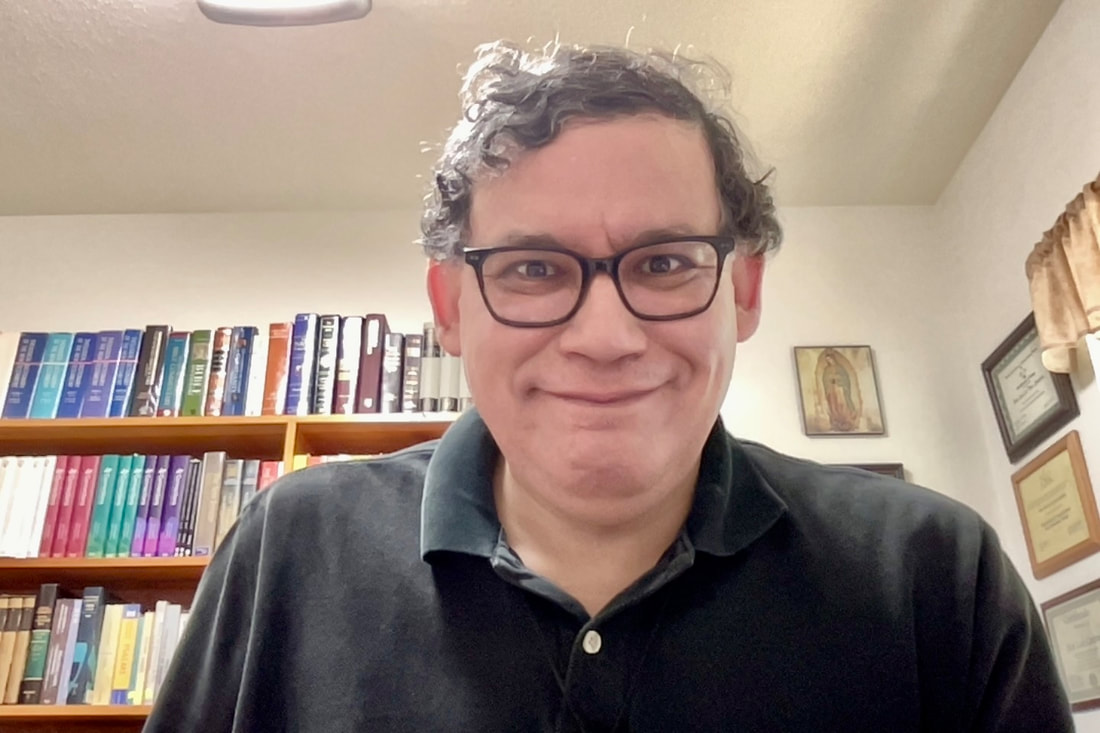
Archives
June 2024
Categories |

 RSS Feed